
What a cannabis association is and how it works in Spain
“Cannabis club”, “cannabis association”, “cannabis social club”. They’re the same kind of place, and people call them all three. What isn’t always clear is what exactly they are, and that confusion means a lot of people arrive with expectations that don’t match reality.
An association, not a business
A cannabis association is a private, not-for-profit entity formed by adults who group together to share a common space. It’s set up like any other association: with by-laws, a board and official registration.
That means there are no customers, only members. And there’s no commercial relationship of retail sale to the public — instead, it’s a group of people who jointly sustain a space they’re part of.
What “not-for-profit” means in practice
It doesn’t mean no money comes in: it means nobody takes a cut. Member fees cover the venue — rent, electricity, water, maintenance, activities — and whatever’s left over is put back into the association itself.
It’s the same legal structure as a chess club, a local society or a residents’ association. The difference is in the activity, not the form.
How it’s organised inside
An association isn’t run by an owner, it’s run by its members. The usual structure looks like this:
- The by-laws. The document that sets out why the association exists, who can be a member and how decisions get made.
- The board. The people who handle day-to-day matters. Elected from among the members.
- The general assembly. The meeting where accounts are approved and important matters are voted on. Every member has a say.
This isn’t decorative: it’s what sets an association apart from a business with a different label. If a club has none of this, it’s worth asking what it actually is.
How it differs from a bar
The core difference is who’s allowed in. A bar is open to the public: you walk in, order something and leave. An association isn’t.
- Only members get in. There’s no access for the general public, not even as someone’s guest.
- Joining is a process. It takes a member’s sponsor- ship and a prior interview, not a payment at the door.
- It’s a private space. What happens inside stays inside, which is why the house rules are strict.
- There’s no open advertising. An association can’t promote itself as if it were a regular venue.
The legal side, plainly
Worth being honest here: in Spain, cannabis associations operate in territory that isn’t explicitly regulated. There’s no law that expressly protects them, but there isn’t one that bans them either, as long as they stay within certain limits.
Those limits are what explain everything else: private in nature, access restricted to adult members, no profit motive, and no activity reaching outward. A club that respects that framework runs smoothly. One that pushes it — letting anyone in, advertising aggressively, or letting the activity spill onto the street — exposes itself, and its members.
That’s why, when the membership process asks you for a sponsor and an interview, it’s not made-up bureaucracy. It’s what holds the whole model up.
A detail that often gets overlooked
Being private isn’t something you declare, it’s something you prove. A club can put “private” in its by-laws, but if in practice anyone who rings the bell gets in, that status falls apart on its own. That’s why access filters aren’t a whim of each venue: they’re the proof that the model is real.
Where the model comes from
Spain’s first cannabis associations appeared in the early nineties, and not as a business: they grew out of groups looking for an alternative to street use and the black market. The idea was simple — if it’s a private space among adults, things change — and it took hold over the years.
Catalonia and the Basque Country are where it developed the most, with several attempts at regional regulation. Growth in Madrid has been quieter and with less legal backing, which explains why clubs here tend to be more careful with their access filters.
And in the rest of Europe
Worth not mixing up the models, because they’re quite different:
- The Netherlands. Coffeeshops with regulated retail sale to the public. No need to be a member of anything.
- Germany and Malta. Have regulated membership clubs under specific law, with limits and official registration.
- Spain. Private associations with no specific law. It’s the most self-governed model of the three.
That difference matters when someone arrives expecting what they’ve seen in Amsterdam: nothing like that exists here.
Common myths
“You can get in as a tourist”
No. An association admits members, not passing visitors. Any venue offering quick access to tourists is doing exactly what puts the whole model at risk.
“It’s like a Dutch coffeeshop”
Not that either. The Dutch model is regulated retail sale to the public; the Spanish one is private association. Different things, different rules.
“If it’s an association, it’s free”
No. Not-for-profit doesn’t mean no cost: there are fees, because the venue has to be paid for. What there isn’t is profit anyone takes home.
“The more members, the better”
The opposite, really. A small, stable club works far better than an overcrowded one, both for the atmosphere and for sustainability.
What actually happens at a club
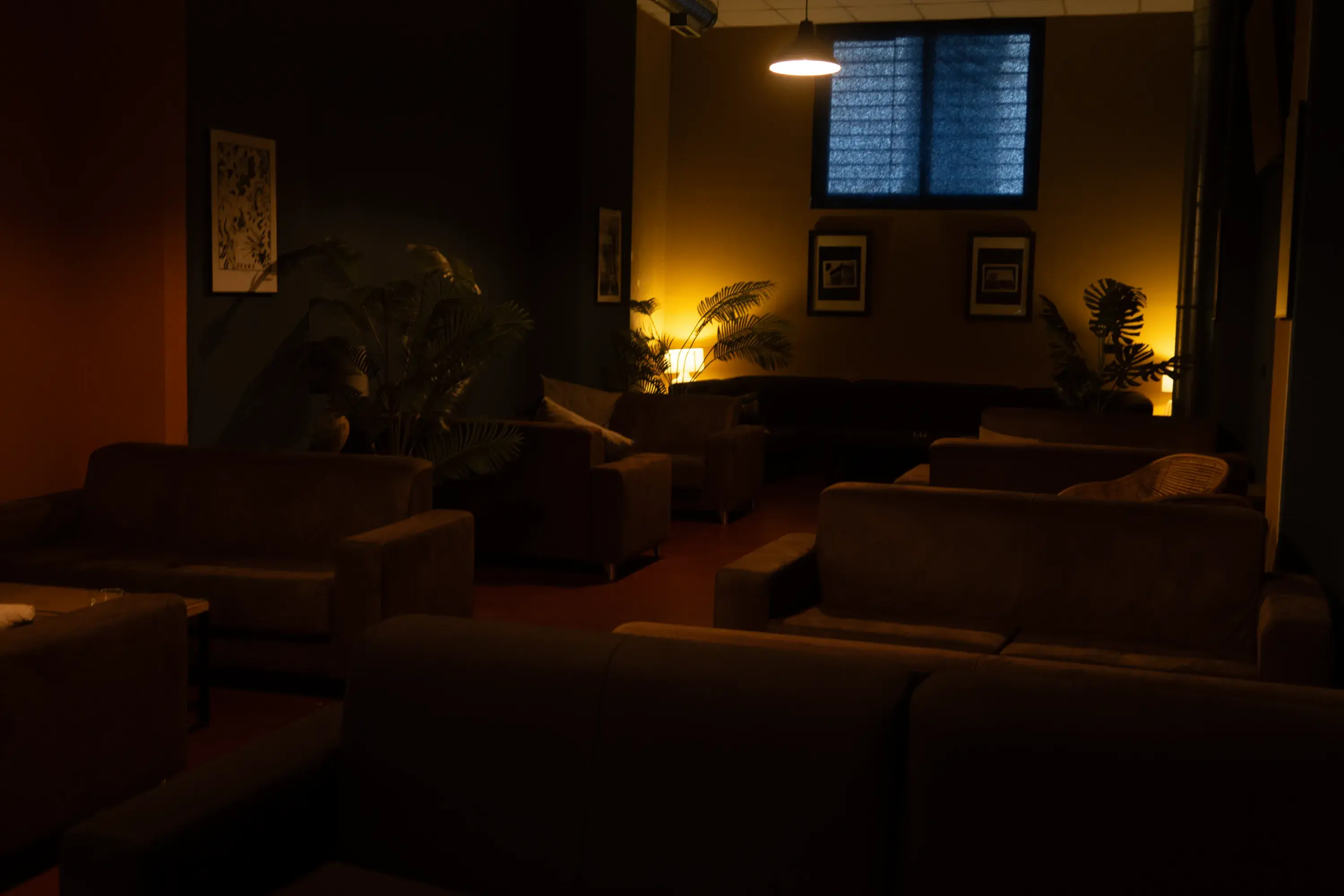
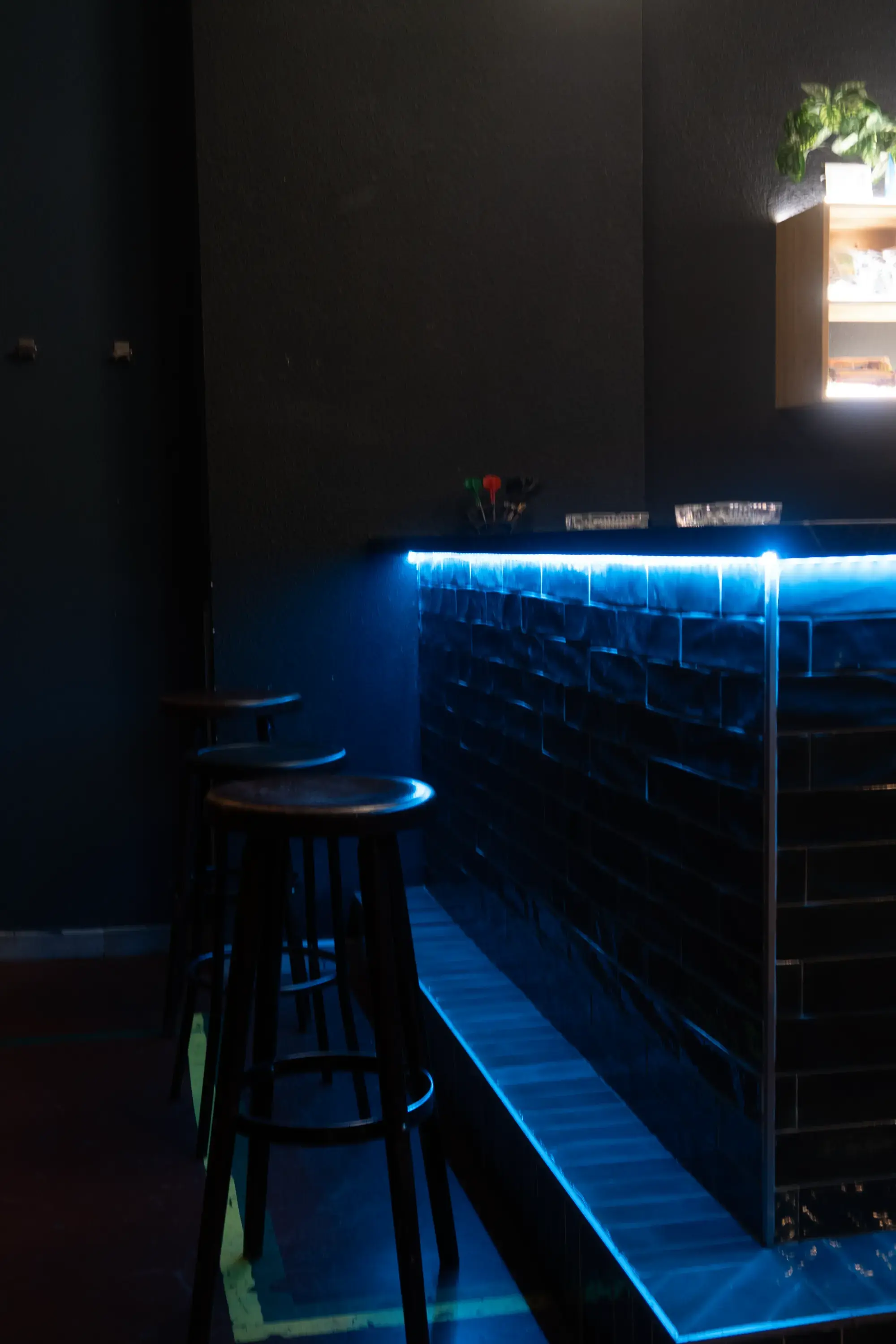
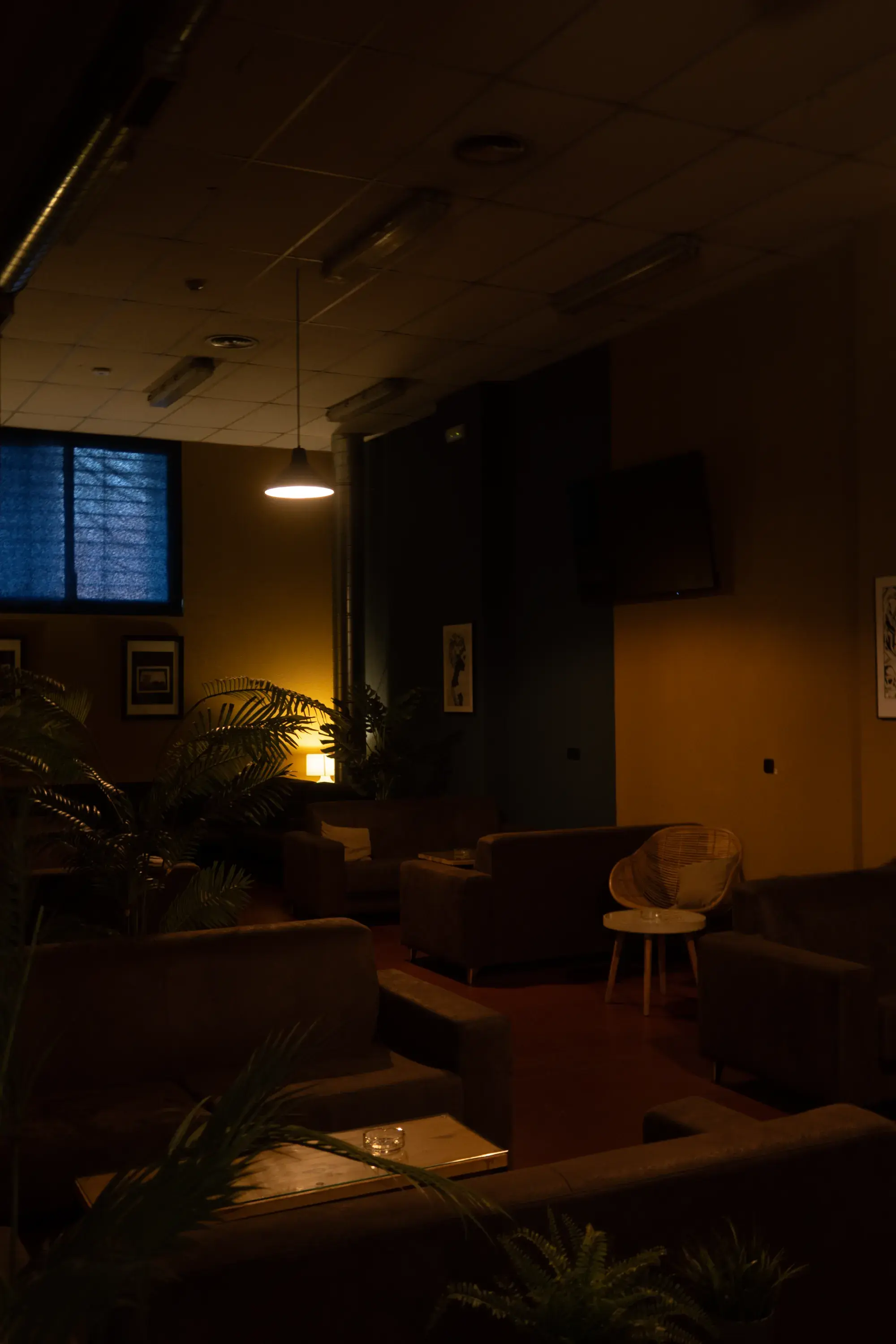
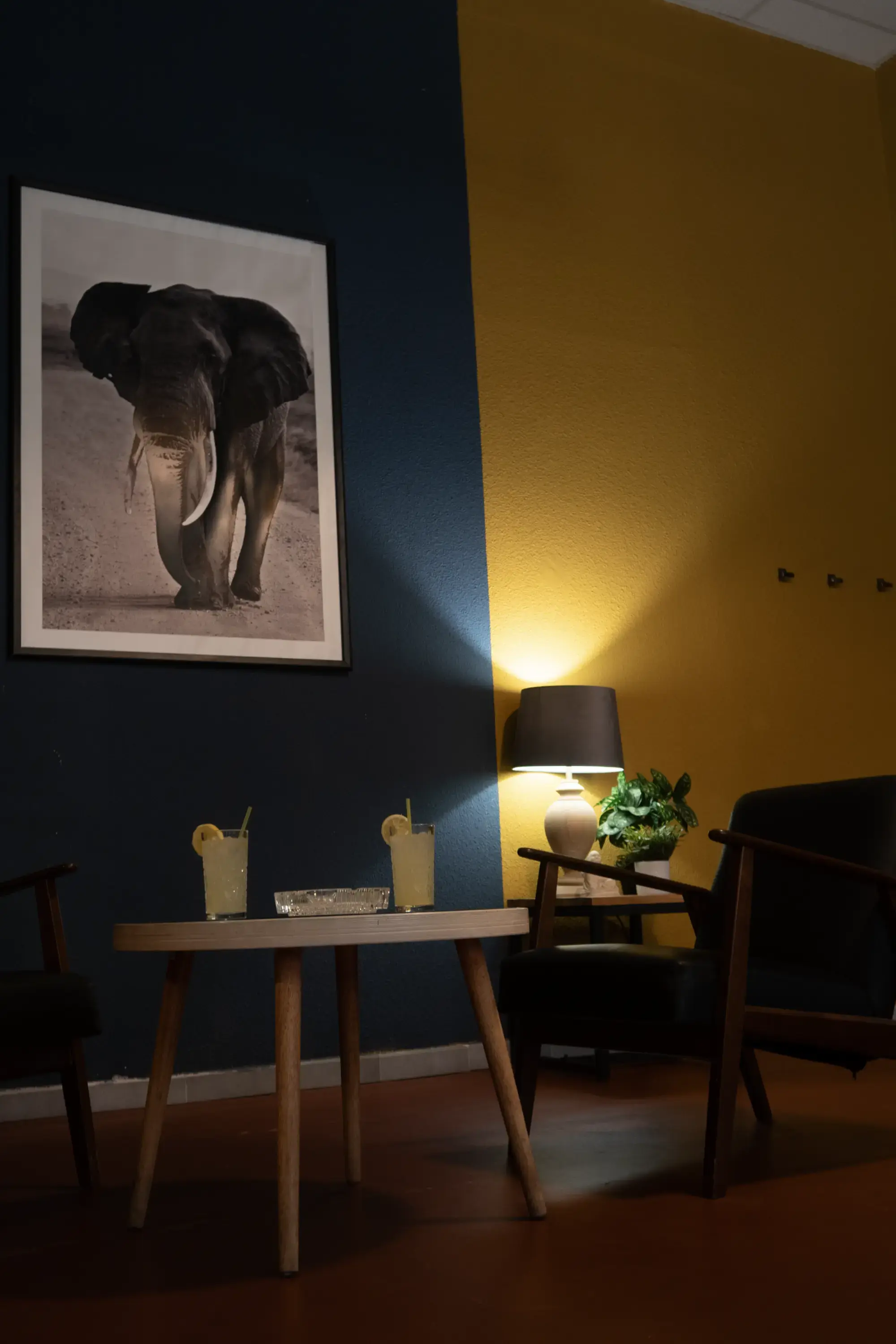
Less mysterious than people imagine. A social club is, above all, a place to be: sofas, conversation, the occasional game, and a bar to get a drink at. At IBOGA there are beers, milkshakes and soft drinks, a pool table and a dartboard.
Plenty of people use it as a third space, neither home nor office: they bring a laptop, work for a couple of hours and stay for a chat. Others only show up for the monthly tournament. There’s no single way to use it.
That mix is exactly what makes it work. A club where everyone goes for the same thing at the same time turns into a waiting room; one with people coming for different reasons has life throughout the whole day.
Who can join
Each association sets its own requirements. It’s common to require being of legal age and some kind of prior reference. At IBOGA the minimum is 24, above the usual, and it takes a member’s sponsorship.
You’ll find the details in requirements and documentation.
How to choose a club
If you’re comparing a few, here’s what tells you the most:
- That they ask for a sponsor and an interview. It’s proof the private character actually holds up.
- That there’s a board and proper accounts. A serious association can explain how it’s managed.
- That there are activities. Without a life of its own, a club is just a waiting room.
- That the atmosphere feels right. The hardest thing to measure and the most important. Worth going to see it before deciding.
On our site you can see what the club looks like inside and the three steps to join before you write to us.
In one sentence
A cannabis association is a private space sustained by its members, with a closed door and clear rules. Understanding that explains at once why access works the way it does, and why it’s worth it being that way.
If you still have questions, there are more answered in the FAQ.